
- Category " Project management, Engineering
Table of Contents
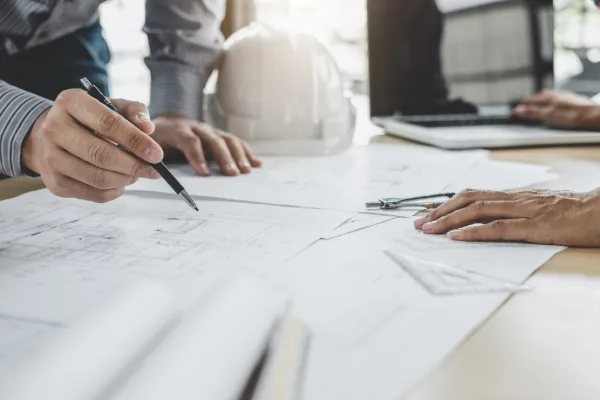
Engineering projects play a crucial role in the development of infrastructures and in improving the quality of life. These projects cover various disciplines, such as civil, mechanical, industrial and mechatronic engineering. This article will explore different types of projects, as well as their impact on the environment and energy efficiency. In addition, the implementation phases will be analysed and the importance of legalisations and certifications in the engineering field.
Civil engineering projects
Civil engineering focuses on the design, construction and maintenance of infrastructures, taking into account current regulations and trends that promote sustainability and energy efficiency.
Sustainable construction works
Sustainable construction has become a priority due to growing concern for the environment. These projects seek to minimise environmental impact through practices that reduce resource consumption. Techniques are implemented such as:
- Use of recycled and sustainable materials.
- Implementation of waste management systems during construction.
- Bioclimatic design that optimises the use of light and natural ventilation.
The integration of clean technologies, such as solar panels and rainwater harvesting systems, is key to meeting new building standards.
Civil works projects in urban infrastructures
Urban infrastructure is key to the development of cities. Projects in this area include the construction and renovation of roads, bridges and transport networks. Some highlights include:
- Carrying out environmental impact studies prior to the start of work.
- Development of solutions that promote sustainable mobility, such as bicycle lanes and efficient public transport.
- Creation of public spaces that improve the quality of life of citizens.
These projects require proper planning and compliance with regulations to ensure safety and well-being in the urban environment.
Innovation in energy efficiency in buildings
Energy efficiency is a crucial factor in modern construction. As new technologies are developed, the industry adapts to these innovations to improve the performance of buildings. Systems are implemented such as:
- LED lighting and home automation to optimise electricity consumption.
- Thermal insulation that reduces the need for heating and cooling.
- Incorporation of renewable energy systems, such as solar and wind, in buildings from the design phase.
These developments not only help to reduce operational costs in the long term, but also contribute to the fight against climate change.
Mechanical engineering projects
Mechanical engineering projects focus on the design, development and optimisation of systems and equipment that improve functionality and safety in various industrial sectors.
Design and development of machinery and equipment
This area of engineering is dedicated to the creation of innovative machinery and equipment, from initial idea to final manufacture. Mechanical engineers use advanced simulation software to optimise the performance and efficiency of devices. Among the main objectives are:
- Maximising productivity through automation.
- Reduce operating costs through efficient design.
- Improve ergonomics and safety for operators.
Research and the application of new materials also play a key role. With the use of composites and advanced alloys, a balance between weight, strength and durability is sought.
Fire protection systems in installations
Safety in the industrial environment includes the implementation of fire protection systems. These systems are fundamental to prevent and minimise risk in installations. Several key aspects are considered:
- Installation of fire extinguishers and smoke detection systems.
- Prevention through the design of safe evacuation routes.
- Training of staff in the use of emergency equipment.
The use of technology in the early detection and suppression of fires contributes to a faster and more efficient response, enhancing safety in industrial operations.
Automation and improvement of industrial processes
Automation has become a fundamental pillar in mechanical engineering. The aim is to optimise production processes through the use of advanced technologies. This includes:
- Integration of robotic systems for materials handling.
- Software development for efficient production management.
- Implementation of smart sensors for real-time monitoring.
Continuous process improvement not only increases efficiency, but also reduces waste, which contributes to sustainability. Mechanical engineering plays a crucial role in the transformation of industries towards more responsible and productive models.
Industrial engineering projects
Industrial engineering projects are essential to optimise processes, improve operational efficiency and ensure compliance with regulations. These projects cover the design, development and management of industrial infrastructures, taking into account legality and sustainability at every stage.
Development of industrial halls and production plants
The development of industrial halls and production plants focuses on the creation of spaces that allow for the manufacture and storage of products. It is crucial to consider the layout of facilities, work flow and the maintenance of occupational safety. The planning of these projects involves site analysis, selection of materials and architectural design that responds to the specific needs of each sector.
Some aspects included in this type of project are:
- Economic and technical feasibility study
- Risk assessment and safety in construction
- Adaptation to environmental regulations
- Implementation of advanced technology in production processes
Legal consultancy and technical certifications
Legal consultancy plays an important role in industrial engineering projects. It ensures that all aspects of the project comply with current labour, environmental and safety legislation. Technical certifications are necessary to ensure that processes and operations are carried out according to established quality standards.
Key areas in this field include:
- Processing of opening and activity licences
- Approval of equipment and machinery
- Advice on occupational health and safety regulations
Optimisation of electricity supply
Optimising the supply of electrical energy is essential for the sustainability of any industrial project. It involves the implementation of technologies to improve the energy efficiency of facilities, reducing costs and environmental impact.
Among the strategies used are:
- Integration of renewable energy sources
- Use of intelligent energy management systems
- Reducing energy consumption by modernising equipment
- Training of staff in energy efficiency practices
Mechatronics engineering projects
Mechatronics engineering combines the fields of mechanics, electronics and computer science. This discipline is applied in the creation of automated systems and technologies that optimise processes, improving efficiency in various industries.
Integration of power generation systems
Nowadays, the integration of energy generation systems is crucial to promote the use of renewable sources and reduce environmental impact. Projects in this field aim to develop efficient and sustainable solutions.
Photovoltaic and solar thermal energy
Photovoltaic solar energy systems convert sunlight into electricity using solar cells, while solar thermal energy uses solar radiation to heat water. Both methods are fundamental to achieving a sustainable energy supply. Projects that implement these technologies allow for a significant reduction in dependence on fossil fuels and contribute to mitigating the effects of climate change.
Geothermal energy applications
Geothermal energy represents a viable solution based on harnessing the heat present in the Earth's interior. Geothermal energy projects include heating and cooling systems as well as electricity generation. This energy source is renewable and offers a constant alternative that minimises fluctuations in the energy market.
Technological innovation in common telecommunications infrastructure
Mechatronics also plays an important role in the modernisation of telecommunications infrastructures. This includes the deployment of fibre optic networks and advanced wireless communication systems. Innovation in this sector facilitates the efficient and secure exchange of information. Among the most prominent initiatives are:
- Deployment of 5G technologies that improve network speed and capacity.
- Network management systems that optimise the use of resources and reduce operating costs.
- Development of interconnected devices for smart cities, improving communication between citizens and public services.
These developments not only benefit the existing infrastructure, but also boost new business models and services in the digital age. Thus, mechatronic engineering not only contributes to technical improvement, but also promotes smarter and more sustainable development.
Projects related to water and environment
Projects related to water and the environment are essential to ensure the availability of water resources and proper waste management. Different techniques and technologies are used to optimise water use and minimise environmental impact.
Drinking water production technologies
Drinking water production is a critical challenge in many parts of the world. A variety of technologies are available to transform non-potable water resources into water suitable for human consumption. These technologies include:
- Desalination: Process that converts salt water into fresh water through methods such as reverse osmosis and electrodialysis.
- Advanced filtration: Uses multi-layered filters to remove contaminants and improve water quality.
- Rainwater harvesting: Systems designed to collect and store rainwater, which can be treated before use.
These solutions are vital, especially in areas with limited water resources, contributing to access to clean and safe water.
Industrial waste management and treatment
The correct management of industrial waste is crucial to protect the environment. Projects in this area aim to minimise waste generation and its impact. Some approaches include:
- Recycling and reuse: Implementation of systems that allow the separation and recovery of useful materials from waste.
- Biological treatment: Use of micro-organisms to break down organic waste and reduce its toxicity.
- Inert: The safe disposal of inert waste that does not cause contamination, contributing to environmentally responsible management.
Compliance with environmental regulations is essential in this type of project to ensure sustainable waste management.
Design of water treatment plants
Water treatment plants are key facilities in water resource management. Their design must consider the capacity to treat different types of water, adjusting to the specific needs of each region. Essential elements in the design include:
- Pretreatment: Systems that remove large solids and contaminants prior to the main treatment.
- Purification techniques: Methods such as sedimentation, filtration and disinfection to ensure that treated water meets quality standards.
- Wastewater reuse: Design of systems that allow the reuse of treated water for non-potable uses, such as irrigation or industrial processes.
The focus on sustainability in the design of these plants ensures a more efficient water cycle, contributing to the conservation of water resources.
Project legalisations and certifications
The legalisation and certification of projects is a fundamental aspect of engineering. It involves obtaining the necessary authorisations for the development of any project and ensuring compliance with current regulations.
Opening and activity licences
Opening and activity licences are essential documents that allow the legal operation of a business or facility. These licences ensure that the project complies with town planning and safety regulations. Each municipality has its own procedure for the processing of these licences, which may include:
- Presentation of a technical project that complies with local regulations.
- Inspections by competent bodies.
- Evidence of the viability of the business from an environmental and safety point of view.
Once approved, the licences grant the right to start the activity in the corresponding premises, always within the established legal framework.
Approval of vehicles and technical conditions
Vehicle type-approval is a process that verifies the compliance of a vehicle's technical and safety characteristics with European or national regulations. This process is essential to ensure road safety and respect for the environment. The technical conditions include:
- Pollutant emissions testing.
- Verification of active and passive safety systems.
- Verification of compliance with energy efficiency standards.
Type-approval must be carried out by authorised bodies, which issue a certificate allowing the vehicle to be used on the road.
Health and safety coordination in projects
Health and safety coordination is a critical aspect in the execution of engineering projects. This activity ensures that occupational risk prevention regulations are complied with and that the health of all workers involved is protected. A good coordination plan includes:
- Development of a health and safety plan addressing the specific risks of the project.
- Training and awareness-raising of staff on safe practices.
- Continuous supervision during the different phases of project implementation.
This coordination minimises accidents at work and promotes a safe working environment, in line with current legislation.
Phases of implementation and management of engineering projects
The proper management and execution of engineering projects is critical to the success of any initiative. These phases range from initial planning to final evaluation of results.
Project methodology and planning
The planning of an engineering project is based on a structured methodology that ensures the control and organisation of the process. This stage includes defining the objectives, identifying resources and drawing up a detailed schedule. The key elements in this phase are:
- Definition of the scope of the project.
- Assignment of roles and responsibilities.
- Preparation of a risk analysis.
- Establishment of performance indicators.
Proper planning is crucial to prevent slippages in the time and budget allocated to the work. It involves the participation of both the technical team and project stakeholders.
Technical services in the implementation phase
During the implementation phase, it is essential to have technical services to oversee the progress of the project. This includes resource management, quality control and coordination between different teams. Some of the services involved are:
- Constant monitoring of the progress of the works.
- Technical inspections and audits.
- Contract and supplier management.
- Conflict resolution and adapting to change.
Effective communication between all actors is crucial to solve problems and maintain operational efficiency. The implementation of project management technologies can facilitate this.
Health and safety assessment on construction sites
The assessment of safety and health in the working environment is a priority responsibility in engineering projects. This phase involves the identification of potential risks and the implementation of mitigation measures. For this, aspects such as the following must be considered:
- Training and education of staff on security issues.
- Establishment of emergency protocols.
- Monitoring of working conditions.
- Periodic reports on incidents and accidents in the workplace.
The safety culture must be promoted from the start of the project, ensuring the well-being of all workers and minimising risks at every stage of the project.
In the media
Related content

By category
Share
Contact us
Follow us on Facebook
Subscribe to our Newsletter
By subscribing to our email newsletter you accept our privacy policy.
 English (UK)
  Español
  Deutsch